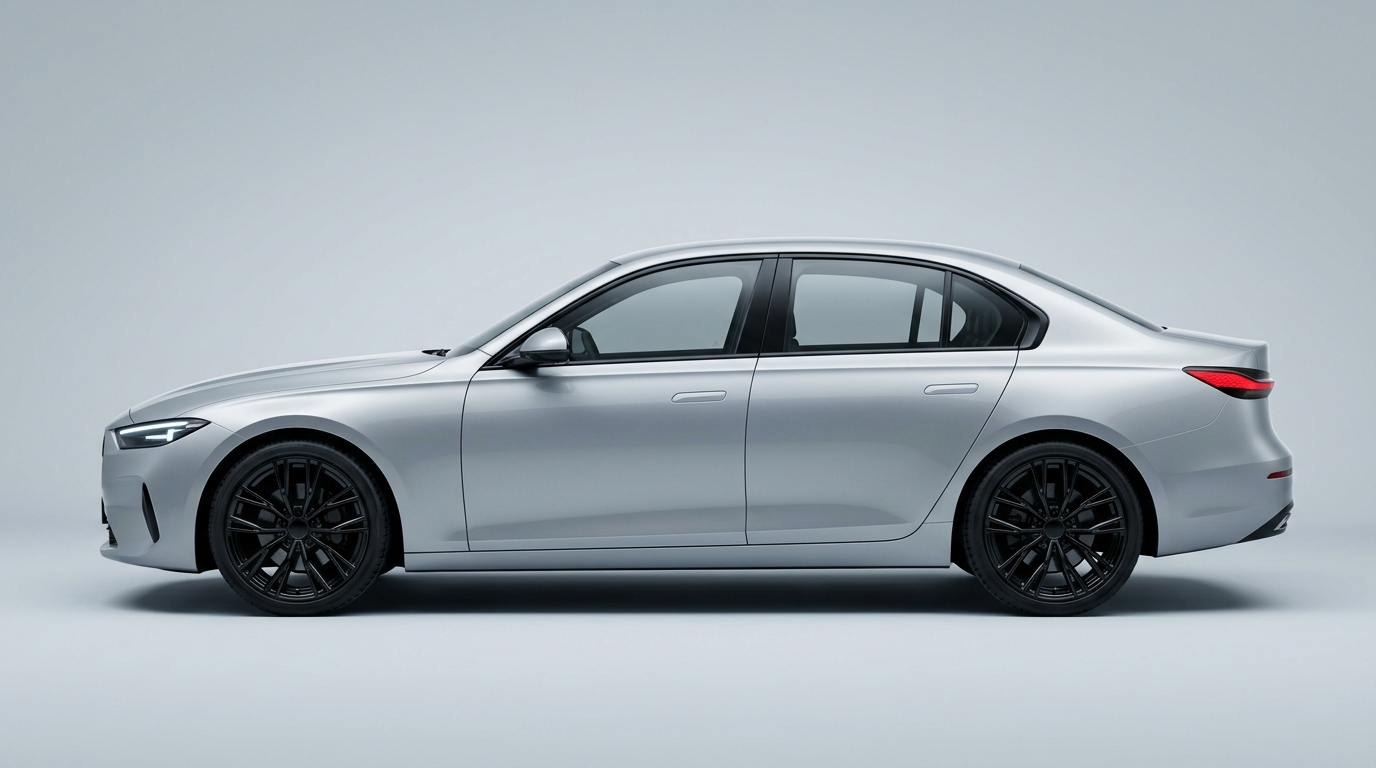
Car Payment Calculator
See what your monthly car payment would be, and whether that payment is one you can actually afford. Check it against the 20/4/10 rule, your salary and the full monthly cost of running a car — before you set foot in a showroom.
Car Payment Calculator
Enter a vehicle you are considering and see whether the payment fits your month.
$583.48
| Amount financed | $30,000.00 |
|---|---|
| Monthly payment | $583.48 |
| Number of payments | 60 |
| Total interest paid | $5,008.70 |
| Down payment + trade-in | $5,000.00 |
| Total of all payments | $40,008.70 |
| Payoff time | 5 years |
This is an estimate covering the loan only. Sales tax, registration, dealer fees and insurance are not included.
We don't store your inputs. No sign-up required.

This page is about what a car costs you each month and whether that fits your income. The budgeting guidance is checked against published material from the Consumer Financial Protection Bureau's auto loan resources, and the FTC's guidance on financing or leasing a car. More about who we are.
Suzon Mahmud
Suzon Mahmud is a consumer-finance writer covering household budgeting, car ownership costs and everyday money decisions.
Estimates for information only, not financial advice. The insurance, fuel and maintenance allowances used here are illustrative placeholders, and your own costs will differ. Get real quotes for the specific vehicle before you commit. See our full disclaimer.
Your Monthly Car Payment
The figure at the top of the results card is the one that has to survive contact with your actual month. A car payment is not a one-off decision — it is a fixed commitment that recurs every month for years, alongside insurance, fuel, tax and the repair you have not budgeted for yet.
Every example on this page uses the same vehicle so you can follow the arithmetic without re-reading it: a $35,000 car with $5,000 down, financed over 60 months. That leaves $30,000 borrowed, and at an illustrative 6.25% the payment is $583.48 a month.
Look at how that first payment splits: $427.23 reduces the balance and $156.25 is interest. Interest is charged on what you still owe, so the share going to the balance grows every month and the final payment is almost entirely principal.
Use this page the other way round. Rather than entering a car you have fallen for and hoping the payment works, start from the payment you know you can afford and raise the price until the monthly figure reaches your ceiling. That number is your realistic budget — and it is a far less stressful way to walk into a dealership.
This page is about whether that payment fits your life. If you have already settled your budget and now want to weigh one finance offer against another, you can compare loan terms and total interest with our auto loan calculator instead.
How Much Car Can I Afford?
This is the question worth answering before any other, and almost nobody answers it first. The usual sequence is backwards: choose a car, then discover what it costs, then decide whether to live with it.
Affordability has three separate tests, and a car has to pass all of them:
- The monthly test. Does the payment fit the money left after your essentials, without quietly cannibalising savings?
- The upfront test. Can you cover a real down payment, plus tax, registration and the first insurance premium, without emptying your emergency fund?
- The total test. Across the whole term, is the sum of payments a sensible share of what you earn — for a thing that loses value every year?
Pass the monthly test but fail the upfront one and you borrow more than the car is worth. Pass both and fail the total test and you have committed years of income to transport.
The most useful way to answer the question is by salary, because that is the number you already know. The table below applies the 10% transport cap to a range of incomes, sets aside a realistic allowance for insurance and fuel, and shows what is genuinely left for the payment itself:
| Gross salary | 10% transport budget | Less insurance & fuel | Left for the payment |
|---|---|---|---|
| $40,000 | about $333/mo | about $240 | about $93 |
| $60,000 | $500/mo | about $270 | about $230 |
| $80,000 | about $667/mo | about $290 | about $377 |
| $100,000 | about $833/mo | about $310 | about $523 |
| $120,000 | $1,000/mo | about $330 | about $670 |
Now hold that against our example. The $35,000 car costs $583.48 a month to finance. On the guideline above, that payment only sits comfortably at a salary around $100,000 or more — which is a very different conclusion from "it is only $583 a month".
Read the final column as a ceiling, not a target. The insurance and fuel allowances are deliberately modest; a younger driver, a longer commute or a thirstier vehicle will push them higher and squeeze the payment column further.
Enter your own figures in the calculator at the top of this page and adjust the price until the payment lands where you need it.
The 20/4/10 Rule Explained
The 20/4/10 rule is a rough budgeting guideline, not a law of finance. It is popular because it quietly protects you from the three ways car finance usually goes wrong: too little deposit, too long a term, and too much of your income committed.
- 20% down. Enough equity from day one that you are not underwater while the car takes its steepest depreciation.
- 4 years maximum. A 48-month ceiling keeps total interest contained and means the loan ends while the car still has useful life.
- 10% of gross monthly income on all transport costs — the payment, insurance, fuel and maintenance together, not the payment alone.
That third number is the one people misread. It is not 10% for the loan; it is 10% for everything with wheels — which is exactly why the salary table above subtracts insurance and fuel before telling you what is left for the payment.
Our example car is a useful test of all three legs at once. A $5,000 deposit on $35,000 is 14.3%, short of the 20% leg. The term is 60 months, which breaks the four-year leg. And the $583.48 payment breaches the 10% leg on any salary much below six figures. One leg missed is common and often fine; this particular car misses all three, and that is the signal worth noticing.
Fixing any one leg pulls the other two toward you. Raising the deposit to $7,000 and dropping back to 48 months changes the picture entirely — the amount financed falls to $28,000, and although the payment rises to roughly $661, the loan ends two years sooner and costs far less in total.
Treat it as a sanity check, not a verdict. The rule ignores everything specific to you: whether you have no other debt or a lot of it, whether a car is essential for your job or a convenience, whether you live somewhere with no transit at all. Plenty of sensible purchases break one leg of 20/4/10. If you break all three at once, though, that is usually the budget telling you something.
Upfront Costs the Monthly Payment Hides
Before the first payment is ever due, buying a car takes a chunk of cash that the monthly figure says nothing about. Budgeting only for the deposit catches a lot of buyers out.
On a $35,000 purchase the day-one bill usually looks something like this:
| Upfront item | Illustrative amount | Can it be rolled into the loan? |
|---|---|---|
| Down payment | $5,000 | No — this is the cash itself |
| Sales tax | varies widely by state | Usually yes |
| Title, registration and plates | a few hundred dollars | Usually yes |
| Dealer documentation fee | varies by dealer and state | Usually yes |
| First insurance premium | often due before you drive away | No |
Tax rates and fee schedules differ so much between states and counties that printing a single figure would mislead most readers, so we leave those rows unpriced — your dealer can tell you exactly.
The important point is the right-hand column. Most of these can be rolled into the loan, and that is the default at many dealerships because it keeps the cash you hand over small. Anything rolled in is borrowed, and you pay interest on it for the whole term. Rolling $2,500 of tax and fees into our 60-month example adds roughly $49 a month and several hundred dollars of interest.
Ask for the out-the-door price. That single figure includes tax, title, registration and every dealer fee. Enter it as the vehicle price in the calculator above, less your deposit, and the monthly result will reflect what you will genuinely be charged rather than the number on the windscreen.

Trade-In Value and Negative Equity
A trade-in behaves exactly like extra cash down: its value comes off the price, so you finance less and the payment falls. The catch is that only your equity counts — the car's value minus whatever you still owe on it.
Three situations, all against our $35,000 car with $5,000 cash down over 60 months:
| Your old car | Equity it contributes | Amount financed | Monthly payment |
|---|---|---|---|
| Owned outright, worth $6,000 | +$6,000 | $24,000 | about $467 |
| Worth $6,000, $6,000 still owed | $0 | $30,000 | about $583 |
| Worth $6,000, $9,000 still owed | −$3,000 | $33,000 | about $642 |
The middle row is the one that surprises people. A car worth $6,000 with $6,000 outstanding feels like an asset, but it contributes nothing to the new purchase — the sale proceeds simply clear the old loan.
The bottom row is negative equity, and it is worth understanding clearly. You owe $3,000 more than the car is worth, and rolling that into the new loan means financing $33,000 for a $35,000 car. You are now paying for two vehicles and driving one, and you start the new loan already underwater.
Negative equity is invisible inside a monthly payment. Rolling $3,000 of shortfall into a 60-month loan adds only about $59 a month, which is easy to accept in a showroom and expensive to live with. If you are in that position, the cheaper choices are to keep the car until the balance clears or to settle the difference in cash. The FTC's guidance on financing or leasing a car is worth reading first.
Before you accept a dealer's trade-in figure, check the car's value independently and ask your current lender for an exact payoff amount. The difference between those two numbers is the only part that actually helps your budget.
How a Down Payment Changes the Monthly Figure
A down payment does two jobs at once: it lowers the monthly commitment, and it buys you equity on day one. The second matters more than most buyers realise.
Using the $35,000 car over 60 months from this page's example, here is what each extra $5,000 of deposit is worth:
| Down payment | Amount financed | Monthly payment | Monthly saving |
|---|---|---|---|
| Nothing down | $35,000 | about $681 | — |
| $5,000 (14.3%) | $30,000 | $583 | about $97 |
| $7,000 (20%) | $28,000 | about $545 | about $136 |
| $10,000 (28.6%) | $25,000 | about $486 | about $194 |
| $14,000 (40%) | $21,000 | about $408 | about $272 |
The relationship is a straight line: at this rate and term, every $1,000 of deposit removes about $19 a month from the payment. That is a handy figure to carry around, because it tells you instantly what three more months of saving would buy you.
Reaching the 20% leg of the 20/4/10 rule on this car means $7,000 rather than $5,000 — an extra $2,000 that lowers the payment by about $38 a month. But the stronger argument for a deposit is protection, not the monthly saving. A new vehicle sheds a meaningful share of its value in the first year or two. Finance the entire price and there is nothing absorbing that drop — you are underwater immediately, and you stay there for a while.
Do not drain your emergency fund for a bigger deposit. A larger down payment and no cash reserve is a fragile position: the next unexpected bill goes on a credit card at a far worse rate than the car loan. Keep the buffer, put down what you comfortably can, and if that means a cheaper car then the deposit has done its job by telling you so.
If you are weighing a deposit against other uses of the same cash, our budget calculator shows what the monthly commitment does to the rest of your month, and the savings calculator works out how long building a bigger deposit would take.
Worked Example: Can You Afford the $35,000 Car?
Let us test the page's example car properly. Suppose you earn $75,000 gross, you have $5,000 saved, and the car you like is $35,000. All figures are illustrative:
- Find the transport ceiling. $75,000 ÷ 12 = $6,250 a month gross. Ten percent is $625 a month for all transport costs.
- Reserve the running costs. Allow roughly $150 insurance and $130 fuel, leaving about $345 a month for the payment itself.
- Price the car you want. $35,000 less your $5,000 deposit means financing $30,000, which over 60 months comes to $583.48.
- Compare against the ceiling. $583 against $345 is an overshoot of about $238 every month. Total transport would be roughly $863 against a $625 cap.
- Work out what does fit. A $345 payment over 60 months supports about $17,700 of borrowing, so with your $5,000 deposit the car to shop for is around $22,700.
- Or close the gap deliberately. Saving another $6,000 toward the deposit, or choosing a car $10,000 cheaper, both bring the payment inside budget. Stretching to 84 months does not — it lowers the payment while making the car cost more.
That is the whole point of running the numbers before you shop. The $35,000 car is not unaffordable in a dramatic sense — it is about $238 a month beyond the guideline, every month, for five years. Knowing that in advance turns it into a deliberate choice rather than a slow surprise.
Notice what the exercise did not involve: no dealer, no negotiation, no pressure, and no credit check. Five minutes and your own figures.
Fitting the Payment Into Your Month
A car payment does not arrive in isolation. It lands in a month that already has rent or a mortgage, utilities, food, and whatever else is committed before you reach discretionary spending.
Three checks are worth doing before you sign anything:
- Run a month without the car first. Write down what actually leaves your account in a normal month. Whatever is genuinely spare is the ceiling — not what you hope will be spare once you are more disciplined.
- Does the emergency fund survive? If the deposit empties your savings and the payment stops you rebuilding them, one failed transmission puts the shortfall on a credit card.
- Test it against a bad month. Reduced hours, a medical bill, a rent increase. A payment that only works when everything goes right is a payment that will eventually go wrong.
A useful trick: practise the payment before you commit to it. Move the exact monthly figure into a separate savings account for two or three months. If it is comfortable, you have proved affordability and built a bigger deposit at the same time. If it hurts, you learned that for free rather than over five years.
The budget calculator splits your take-home pay into needs, wants and savings so you can see where a car payment actually fits, and the paycheck calculator works out the take-home figure to start from.
The Real Monthly Cost of Owning the Car
The payment is the part with a contract attached, so it gets all the attention. It is rarely the whole story. Here is what our example car plausibly costs each month once everything is counted:
| Cost | Typical monthly figure | Share of the total |
|---|---|---|
| Loan payment | $583 | about 64% |
| Insurance | about $150 | about 17% |
| Fuel | about $130 | about 14% |
| Maintenance, tyres, repairs | about $45 | about 5% |
| True monthly cost | about $908 | 100% |
The payment is about two-thirds of what the car actually costs you. Budget only for the $583 and you are roughly $325 a month short — more than $19,000 across the five-year term.
Those four categories behave very differently. The payment is fixed and predictable. Insurance is knowable in advance but varies enormously by vehicle and driver. Fuel tracks your mileage. Maintenance is the one that arrives irregularly and never conveniently, and on an out-of-warranty car it needs a genuine reserve behind it rather than a monthly average.
We deliberately do not estimate these inside the calculator. Premiums and tax rates vary so widely by state, vehicle and individual that any figure we printed would be wrong for most readers — and a confidently wrong number is worse than none.
Get an insurance quote before you commit, not after. It takes a few minutes and occasionally changes the decision entirely. Two cars at the same price can differ by $80 a month in premium, and that difference lasts as long as you own the vehicle.
Signs the Car Is Too Expensive for You
Affordability problems rarely announce themselves. They show up as small compromises that each seem reasonable at the time. These are the common ones:
- The payment only works at 72 or 84 months. If a sane term puts it out of reach, the car is out of reach.
- You are rolling negative equity from the last car into this one. You are now financing two vehicles and driving one.
- The deposit would empty your emergency fund. A car with no buffer behind it is one repair away from credit-card debt.
- You have not priced the insurance yet. On some vehicles the premium rivals the payment, and it is entirely knowable in advance.
- The conversation is only ever about the monthly figure. Any payment can be reached by extending the term; that is not the same as the car being affordable.
None of these is automatically disqualifying. Hitting several at once usually means the honest answer is a cheaper car, a bigger deposit, or a few more months of saving — and that is a much better outcome than discovering it in year three.
How to Use This Car Payment Calculator
Six steps, about a minute.
Use it as a budgeting tool, which means working from your money toward a car rather than the other way round.
- Work out your transport ceiling first. Take 10% of your gross monthly income as a starting guideline for everything — payment, insurance, fuel and maintenance together.
- Subtract realistic running costs to find what is left for the payment itself. Get an actual insurance quote for the vehicle class you are considering.
- Enter a candidate price, using the out-the-door figure if you have one, so tax and fees are included.
- Enter the deposit you can genuinely afford — without emptying your emergency fund — and add only your real trade-in equity.
- Set a 48-month term to start with. If the payment only works at 72 or 84 months, treat that as information about the car rather than a reason to extend.
- Adjust the price until the payment lands inside your ceiling. That figure, not the one on the windscreen, is your actual budget.
If you already know what you can borrow and now want to weigh specific finance offers, you can compare loan terms and total interest with our auto loan calculator, which is set up for exactly that.
Ways to Bring the Payment Into Budget
Ordered by how much they typically move the number, and by how much control you actually have over them.
- Choose a cheaper car. Unglamorous and by far the most effective. Dropping our $35,000 example to $28,000 takes the payment from $583 to about $447 — $136 a month, with no negotiation required.
- Buy two or three years old. Someone else has absorbed the steepest depreciation; you get similar transport for a smaller loan.
- Save a larger deposit first. About $19 a month off the payment for every $1,000 down — and waiting three months to add to it is cheaper than five years of a payment that does not fit.
- Clear negative equity before you trade in. Rolling a shortfall forward raises the amount financed and the payment with it.
- Price the insurance before choosing the model. Two cars at the same price can differ sharply in premium, and that difference is permanent.
- Refuse add-ons rolled into the loan. Paint protection, extended warranties and gap products financed over years attract interest the whole time.
- Settle the out-the-door price before discussing monthly payments. Agreeing a payment first lets the term and the price move without you noticing.
Best Budgeting Tips That Actually Stick
A car payment is a fixed commitment for years. This guide covers the budgeting systems that survive real life, so you know what is genuinely spare before you commit any of it.
Read Full GuideFrequently Asked Questions
Your payment is set by three things: the amount you finance after the down payment and trade-in come off the price, the interest rate, and the number of months in the term. On the $35,000 car used throughout this page, a $5,000 down payment leaves $30,000 financed; over 60 months at 6.25% that works out at $583.48 a month. Interest is charged on the balance still outstanding, so the first payment contains the most interest and the last contains the least.
A $60,000 salary is $5,000 a month gross, and the 20/4/10 guideline caps all transport spending at 10% of that, so $500 a month. Insurance and fuel typically take $250 to $300 of it, leaving roughly $200 to $250 for the payment itself. At that payment a four-year loan supports somewhere around $9,000 to $11,000 of borrowing, so with a deposit you are shopping in the low-to-mid teens rather than at $35,000. If a car only fits by ignoring insurance and fuel, the budget has not actually been met.
Every dollar you put down is a dollar you do not finance, and on a 60-month loan at 6.25% roughly every $1,000 of deposit removes about $19 a month. Going from $5,000 down to $10,000 down on a $35,000 car cuts the payment from $583.48 to about $486, a saving of about $97 every month. The deposit also protects you from owing more than the car is worth in the early years, which matters more than the monthly saving.
It is a budgeting guideline with three parts: put at least 20% down, keep the term to four years or less, and spend no more than 10% of your gross monthly income on all transport costs combined. That last figure is the one people misread. It covers the payment, insurance, fuel and maintenance together, not the payment on its own. Plenty of sensible purchases break one leg of it; breaking all three at once usually means the car is beyond your budget.
Usually not yet. When the balance exceeds the value you have negative equity, and trading in simply moves that shortfall onto the new loan, so you start the new car already owing more than it is worth. Dealers will happily roll it in because it is invisible inside a monthly payment. The cheaper options are to keep the car until the balance clears, or to pay the difference in cash if you must change vehicles now.
How We Worked Out These Affordability Figures
The monthly payment is produced by the standard fixed-rate installment calculation, applied month by month with no rounding until the figure reaches the screen. It assumes a fixed rate across the whole term and an unchanging payment. The payment-to-salary figures work backwards from that same calculation.
Prices, rates, terms, down payments and trade-in values are estimates you supply; we do not quote rates, check your credit, or contact dealers or lenders on your behalf. Every worked example on this page uses the same $35,000 car with $5,000 down over 60 months, at an illustrative 6.25% chosen to make the arithmetic easy to follow — it is not an offer or a prediction about what you would be charged.
The 20/4/10 guideline is a convention, not a standard. It has no regulatory status and no single authoritative source; we present it because it is widely used and because each of its three parts maps onto a common way car finance goes wrong. The salary figures are simple arithmetic on round numbers, and the insurance, fuel and maintenance allowances are illustrative placeholders — not claims about what anyone should earn or spend.
Results exclude tax, fees and insurance. Sales tax, registration, title and documentation fees, dealer add-ons, gap cover, extended warranties, insurance, fuel and servicing are all outside the scope of this calculator. Leases, balloon-payment agreements and variable-rate finance are not modeled either. Table figures are rounded to the nearest dollar, so a total may differ by a dollar from the sum of its rounded parts.
More Budgeting Tools
These free tools help with the rest of the picture:
- Home — every free calculator on the site in one place.
- Auto Loan Calculator — compare loan terms and total interest once your budget is settled.
- Budget Calculator — see where a car payment actually fits in your month.
- Loan Calculator — monthly payment and total interest on a personal loan.
- Mortgage Calculator — payment including property taxes, insurance and PMI.
- Debt Payoff Calculator — how fast you can clear a balance.
- Paycheck Calculator — take-home pay after federal tax and FICA.
- Amortization Calculator — the full payment-by-payment schedule for your loan.
- Down Payment Calculator — how much cash a given percentage down takes on a home purchase.
- Financial Tips & Guides — plain-English articles on rates, debt and budgeting.
- About — who writes this site and how the tools are built.
- Contact — report an error or suggest a calculator.
- Disclaimer — the limits of what these estimates can tell you.